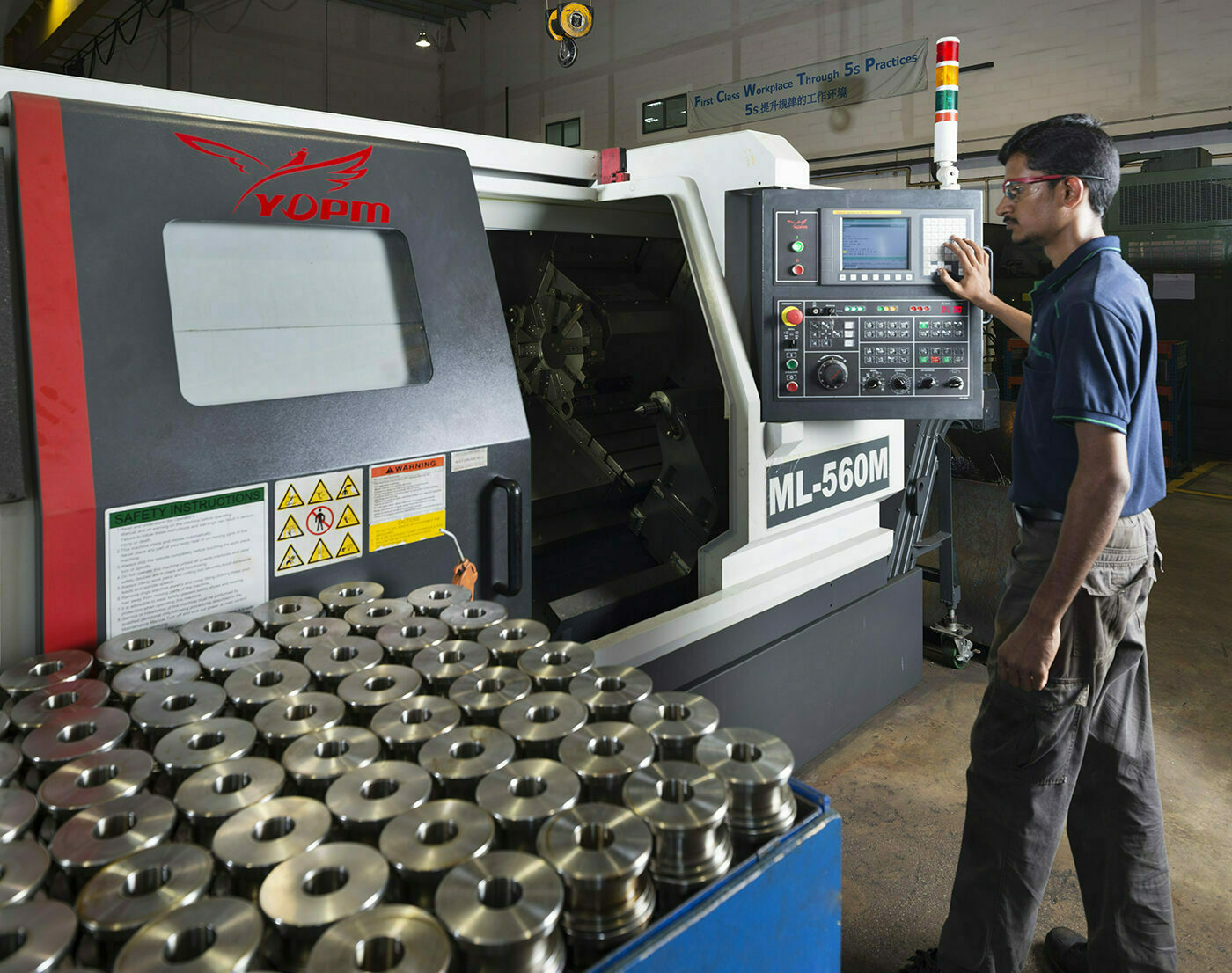
Industrial cylinders are the often unseen heroes of many machines throughout the globe, quietly powering demanding tasks in infrastructure, agribusiness, production, and mining work. These powerful hydraulic actuators change pressurized oil into accurate, direct movement, raising, pushing, retrieving, and positioning large materials with control and consistency. While they may look surprisingly simple from the surface, the performance of a mechanical cylinder is the product of the perfect operation of numerous inner elements operating as one in perfect balance. Learning these essential components and their jobs is critical for any technician working in engineering, operation, or maintenance of industrial systems. Hydraulic cylinder parts
Main Elements of a Hydraulic Cylinder and The Way They Operate
At the center of any hydraulic unit lies the pressure barrel, a precision-machined housing that contains the core internal elements. It serves as the primary shell of the system and holds the pressurized oil that carries force. Because it must handle intense operating pressure and support consistent operation, the inside wall of the cylinder is precisely treated to exact specifications.Inside this barrel sits the piston, the moving component that splits the inside chamber into distinct fluid zones. When high-pressure oil is sent to either side of the piston, force develops and pushes the unit along the inside of the barrel. This action is what ultimately creates the powerful, linear motion that the unit is designed to produce. The piston alignment and sealing within the tube are essential for effective pressure transfer and minimal fluid bypass.
Connected directly to the component is the output bar, a strong metal rod that transmits the force produced within the unit to the outside machinery. Whether pushing out to raise a large load or retracting to reset a part, the output shaft must be incredibly durable and damage-resistant. Often surface-treated or specially treated to limit oxidation and drag, this rod ensures that the unit can maintain reliable results under the harshest conditions. Hydraulic cylinder parts
How Knowing Hydraulic Elements Matters Even Than You Expect
Mechanical actuators hold a critical purpose in many mechanical uses, but their efficiency and durability depend on the state of each inner element. Understanding the roles of the main barrel, core, output, seals, and supporting elements empowers technicians to identify faults rapidly, plan servicing on time, and make informed choices about overhauls or upgrades. A worn shaft sealing ring might result in liquid escape long ahead of a piston failure becomes evident, and spotting this quickly can prevent major interruptions and service expenses.Moreover, picking the correct mechanical system for a given job needs understanding of how these parts influence force, motion precision, and strength. Whether you are planning machinery for a building fleet, repairing farming machinery, or analyzing industrial automation, a strong understanding of hydraulic cylinder structure helps ensure maximum results.
As the backbone of so countless industrial applications, industrial cylinders need careful consideration. By understanding the jobs each component plays—from the durability of the piston bar to the sealing of a compact O-ring—you maximize the complete potential of your systems and safeguard its function for years to ahead.
Find out more on - Hydraulic cylinder parts